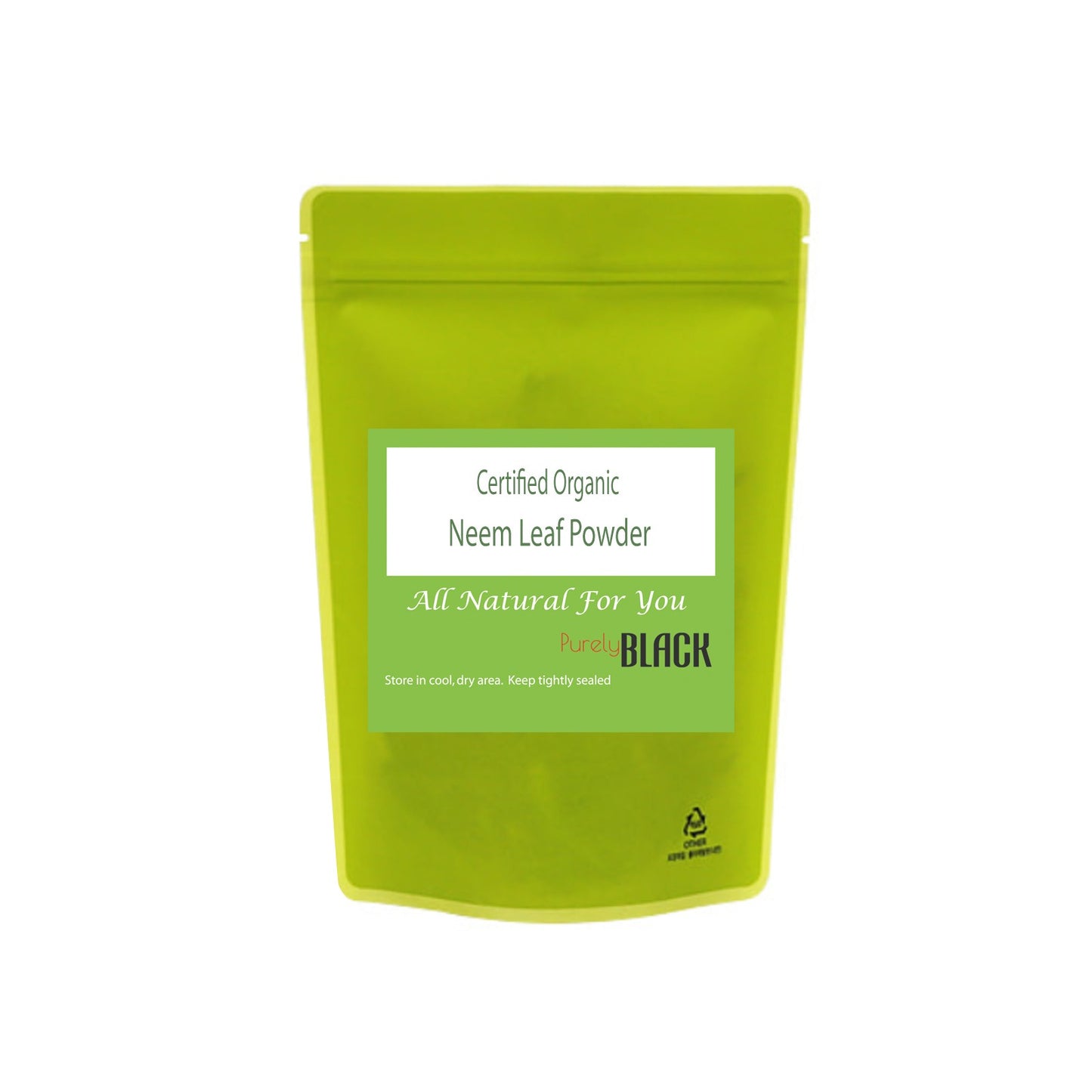
Certified Organic Neem Leaf Powder for Detox and Skin Wellness
Couldn't load pickup availability
Share
What is Neem Powder good for?
Neem Powder supports systemic detox, skin wellness, and microbial balance with centuries of Ayurvedic wisdom.
For over 4,500 years, Azadirachta indica has been revered as the "village pharmacy" across the Indian subcontinent. Sourced from organic neem leaves and micro-milled to preserve potency, this Certified Organic powder delivers nature's most comprehensive purifying botanical in a convenient, versatile form. purelyBlack's Neem Powder is 100% pure, vegan, and cruelty-free, crafted for those who embrace traditional botanical wellness pathways. Explore the tabs below for detailed botanical profiles, step-by-step recipes, and safety guidelines.
PRODUCT DETAILS & PROFILE
Core Product Details
- Botanical Name: Azadirachta indica (italics)
- Plant Family: Meliaceae
- Plant Part Used: Leaf
- Processing Method: Micro-Powder
- Country of Origin: India
- Texture & Colour: Fine, vibrant green powder with a soft, slightly fluffy texture and earthy, medicinal aroma
Quality & Purity
- Certified Organic: Azadirachta indica is native to the Indian subcontinent and to parts of Southeast Asia, but is naturalized and grown around the world in tropical and subtropical areas. Grown without synthetic pesticides, herbicides, or GMO inputs, certified to international organic standards.
- 100% Pure & Natural: No fillers, synthetics, additives, flow agents, or preservatives.
- Vegan & Cruelty-Free: No animal-derived ingredients. Never tested on animals.
- Australian Brand: Proudly Australian-owned and operated.
- Quality Assured: Batch-tested for purity and botanical integrity.
Botanical Profile & Key Constituents
What does Neem Powder smell and taste like?
Neem Powder has an intensely bitter, astringent taste with a pungent, earthy, medicinal aroma reminiscent of freshly crushed green herbs. The dry powder smells sharp and slightly camphoraceous, while brewed tea carries a woody, vegetal scent with a lingering herbal intensity. The bitterness is due to high concentrations of limonoids such as azadirachtin and nimbin, compounds that have been studied for centuries in Ayurvedic pharmacology. Ancient Sanskrit had a particular expression for a state of good health: "Nimba," which over time derived into Neem; nowadays, Neem is used to reference the Azadirachta indica tree, traditionally thought to bring "good health" to those who take them. Traditional herbalists describe neem as "tikta rasa" (bitter taste), one of the six tastes in Ayurveda, revered for its purifying and detoxifying actions.
- Key Constituents: The most important active constituent is azadirachtin, and the others are nimbolinin, nimbin, nimbidin, nimbidol, sodium nimbinate, gedunin, salannin, and quercetin. Leaves contain ingredients such as nimbin, nimbanene, 6-desacetylnimbinene, nimbandiol, nimbolide, ascorbic acid, n-hexacosanol and amino acid, 7-desacetyl-7-benzoylazadiradione, 7-desacetyl-7-benzoylgedunin, 17-hydroxyazadiradione, and nimbiol. On average, neem kernels contain between 2 and 4 mg of azadirachtin per gram of kernel. These compounds contribute to neem's traditional role as a broad-spectrum purifying botanical, supporting microbial balance, skin wellness, and digestive harmony.
- Traditional Heritage: On the Indian subcontinent, the neem tree has been used for more than 4,500 years; the earliest documentation of neem mentioned the fruit, seeds, oil, leaves, roots and bark for their advantageous medicinal properties. It has been widely utilized in Ayurveda, Unani, and Homeopathic treatments and has gained significant attention in modern medicine; traditionally, neem leaves, flowers, seeds, fruits, roots, twigs, and bark have been used to treat fever, infection, skin conditions, and dental problems. Azadirachta indica (Neem) is a miracle tree cultivated in the Indian subcontinent for around 4,500 years owing to its medicinal and pesticidal significance due to its potential life saver phytochemical ingredients.
MAIN BENEFITS & PROPERTIES
How do you use Neem Powder?
Neem Powder is steeped as a detox tea, blended into smoothies, or applied as a topical paste for skin and scalp wellness.
Traditional Wellness Uses
- Systemic Detox & Blood Purification: The neem tree has been widely used in traditional systems of medicine, with its curative power used to manufacture medicines for skin diseases, ulcers, gastrointestinal problems, oral care, urinary tract problems, hair problems, diabetes, blood pressure and cholesterol. The neem leaf is especially useful in balancing Vata disorders, removing ama and other toxins from the body, purifying the blood, and neutralizing damaging free radicals. For those embracing seasonal detox protocols, discover traditional preparation methods in our guide Neem Powder for Detox Recipes and How to Drink It.
- Oral Health & Gum Support: Neem has traditionally been used as a type of teeth-cleaning twig. The leaf extract is used to reduce tooth plaque and to treat lice. For centuries, millions have cleaned their teeth with neem twigs, smeared skin disorders with neem leaf juice, taken neem tea as a tonic, and placed neem leaves in their beds, books, grain bins, cupboards, and closets to keep away troublesome bugs.
- Digestive Wellness: Neem contains chemicals that might help reduce blood sugar levels, heal ulcers in the digestive tract, prevent pregnancy, kill bacteria, and prevent plaque from forming in the mouth. In a study, 6 people with intestinal ulcers took 30 mg of neem extract orally twice daily; after 10 days, acid secretion had declined significantly, and after 10 weeks, the ulcers were almost completely healed.
Skin & Hair Benefits
- Skin Clarity & Microbial Balance: Azadirachta indica has antifungal and antibacterial properties which help eliminate dandruff and strengthen hair. Neem has an anti-inflammatory property which helps reduce acne and also helps reduce skin blemishes. For comprehensive topical applications and DIY beauty protocols, explore our step-by-step tutorial How to Use Neem Powder for Skin and Hair.
- Scalp & Hair Vitality: Neem leaf is nourishing to the hair and revered for its antibacterial and antiviral properties. Neem is an excellent exfoliant that helps remove dead cells from the surface of the skin, which will help prevent the growth of blemishes.
Nutritional & Botanical Properties
- Azadirachtin (0.2-0.8% in seeds, present in leaves): The most important active constituent is azadirachtin, and the others are nimbolinin, nimbin, nimbidin, nimbidol, sodium nimbinate, gedunin, salannin, and quercetin. Azadirachtin has proved to be the tree's main agent for battling insects and appears to cause some 90 percent of the effect on most pests. Evidence from literature suggested that neem tree has approximately 186 biologically active ingredients, especially azadirachtin isolated from neem plant parts; the other bioactive substances with potential biological and medicinal properties are nimbinin and nimbidin.
- Nimbin, Nimbidin, and Limonoids: Leaves contain ingredients such as nimbin, nimbanene, 6-desacetylnimbinene, nimbandiol, nimbolide, ascorbic acid, n-hexacosanol and amino acid, 7-desacetyl-7-benzoylazadiradione, 7-desacetyl-7-benzoylgedunin, 17-hydroxyazadiradione, and nimbiol. Neem leaves contain therapeutic compounds, such as sodium nimbidate and nimbidin, as well as good nutrition, which is essential for the production of collagen and the growth of new capillaries.
- Quercetin and Polyphenolic Flavonoids: Quercetin and ß-sitosterol, polyphenolic flavonoids, were purified from neem fresh leaves and were known to have antibacterial and antifungal properties. Various studies have shown that neem's antioxidant properties are related to polyphenols and compounds such as azadirachtin and nimbin.
Is Neem Powder good for immune support?
Neem Powder has been traditionally used to support the body's natural defenses and microbial balance.
Azadirachta indica shows therapeutic role in health management due to rich source of various types of ingredients; the most important active constituent is azadirachtin and the others are nimbolinin, nimbin, nimbidin, nimbidol, sodium nimbinate, gedunin, salannin, and quercetin. Studies have tested the antioxidant effect of neem and its effect on the body's natural defenses; studies on rats demonstrated that extracts of potential compounds of neem were able to boost the body's natural defenses. Always consult a qualified health practitioner before using neem internally for immune support, particularly if you have autoimmune conditions or are on immunosuppressant medications.
Is Neem Powder safe to take every day?
Short-term use of Neem Powder at traditional serving sizes may be safe, but long-term daily use is not well-studied and should be supervised by a healthcare professional.
Doses of up to 60 mg of neem bark extract daily for up to 10 weeks have been used safely in adults. Neem is possibly unsafe when taken by mouth in large doses or for long periods of time and might harm the kidneys and liver. Excessive doses (e.g., 10 g leaf powder daily) can cause nausea and liver enzyme elevation. Traditional Ayurvedic protocols recommend cyclical use rather than continuous long-term consumption. Always work with a qualified herbalist or naturopath to determine appropriate duration and dosage for your individual constitution and health goals.
What does Neem Powder taste like?
Neem Powder has an intensely bitter, astringent taste with earthy, herbal undertones and a slightly pungent aroma.
The dry powder carries a concentrated, medicinal bitterness that reflects its high concentration of limonoids and triterpenoids. When steeped as tea, the bitterness mellows slightly but remains pronounced, with a woody, green finish. Traditional preparation methods often incorporate honey, lemon, ginger, or cardamom to balance the astringent profile. The Sanskrit name "Nimba" translates to "bestower of good health," reflecting ancient respect for this powerful, unapologetically bitter botanical.
Where to Buy
Where can I buy Certified Organic Neem Powder in Australia?
purelyBlack offers Certified Organic Neem Powder with free shipping Australia-wide, available directly at purelyblack.com.
Every batch is sourced from organically certified farms in India, where neem has been cultivated for millennia. purelyBlack's micro-milled Neem Powder is 100% pure leaf with no fillers, additives, or flow agents, ensuring you receive the full spectrum of traditional botanical compounds. As a proudly Australian-owned brand, purelyBlack delivers authentic Ayurvedic botanicals direct to your door, with the convenience of online ordering and the assurance of certified organic integrity.
HOW TO USE
HOW TO USE
Neem Powder Suggested Serving
- Traditional Ayurvedic practice suggests 1/4 to 1/2 teaspoon of Neem Powder per cup of hot water for tea, taken 1-2 times daily for short-term use. Always consult a healthcare practitioner before commencing internal use, particularly for extended periods.
Master Class: How to Make Neem Tea
- Measure 1/4 teaspoon of Neem Powder into a heat-safe mug or cup.
- Boil fresh filtered water and allow to cool slightly to approximately 90-95°C.
- Pour 250ml of hot water over the powder and stir gently to disperse.
- Steep for 3-5 minutes, then sweeten with raw honey, lemon juice, or fresh ginger to balance the natural bitterness.
- Sip slowly on an empty stomach in the morning, or as directed by your Ayurvedic practitioner. The tea carries a potent, earthy bitterness that reflects its purifying properties.
Neem Powder Smoothie & Food Uses
- Detox Green Smoothie: Blend 1/8 teaspoon Neem Powder with 1 cup coconut water, 1/2 cup pineapple, 1/2 frozen banana, a handful of spinach, and 1/2 teaspoon fresh ginger. The tropical fruit sweetness balances neem's bitter edge.
- Immunity Tonic Shot: Whisk 1/4 teaspoon Neem Powder into 60ml warm water with 1 teaspoon raw honey, a pinch of turmeric, and a squeeze of lemon. Consume as a morning wellness shot.
- Ayurvedic Herbal Paste: Combine 1/4 teaspoon Neem Powder with 1 teaspoon ghee or sesame oil and a pinch of black pepper. Take with warm water before meals to support digestion, as traditionally practised in Ayurveda.
DIY Topical Application
- Clarifying Face Mask: Mix 1 teaspoon Neem Powder with 1 tablespoon plain yoghurt and 1/2 teaspoon raw honey. Apply to cleansed skin, leave for 10-15 minutes, then rinse with warm water. For external use only.
- Scalp Purifying Treatment: Blend 2 teaspoons Neem Powder with 3 tablespoons warm coconut oil and 1/2 teaspoon aloe vera gel. Massage into the scalp, leave for 20 minutes, then shampoo thoroughly. For external use only.
- Skin Soothing Paste: Combine 1 teaspoon Neem Powder with 1 tablespoon rose water or aloe vera gel to form a smooth paste. Apply to areas of concern, leave for 15 minutes, then rinse gently. For external use only.
Pairs Well With
- Aloe Vera Powder
- Amla Powder
- Turmeric Powder
- Moringa Powder
- Ashwagandha Powder
SAFETY & PRECAUTIONS
General Safety Guidelines
- Consult a Healthcare Professional: Always consult a qualified health practitioner before using Neem Powder internally, especially if you are taking prescription medications, have pre-existing health conditions, or are pregnant, nursing, or planning to conceive. Neem is a potent botanical and professional guidance is essential.
- Medication Interactions: Neem may lower blood sugar levels and could interact with diabetes medications, potentially causing blood sugar to drop too low. Neem may have diuretic effects and could affect how the body eliminates lithium, potentially increasing lithium levels and causing serious side effects. Neem may increase immune system activity and could reduce the effectiveness of immunosuppressant medications.
- Safe Storage: Store in a cool, dark, airtight container away from moisture and direct sunlight. Use within recommended timeframes; prolonged use or large doses may be unsafe and might harm the kidneys and liver.
Specific Precautions
- Pregnancy & Nursing: Neem oil and neem bark are likely unsafe when taken by mouth during pregnancy and can cause a miscarriage. There isn't enough reliable information to know if neem is safe to use when breast-feeding; avoid use. Animal studies show neem extract terminated pregnancy in rodents and primates at early post-implantation stage, with no residual permanent effect and fertility regained in subsequent cycles.
- Children: Taking neem seeds and seed oil by mouth is likely unsafe in children; serious side effects in infants and small children can happen within hours, including vomiting, diarrhea, drowsiness, seizures, loss of consciousness, coma, and death. Topical neem extract shampoo is possibly safe in children when applied once or twice to the head for 10 minutes, then rinsed with warm water.
- Sensitive Individuals: Neem might cause the immune system to become more active, which could increase symptoms of autoimmune diseases such as multiple sclerosis, lupus, rheumatoid arthritis, or other conditions; avoid using neem if you have these conditions. Neem is possibly unsafe when taken by mouth in large doses or for long periods of time and might harm the kidneys and liver.

Something else you'll love
-
Food Grade Australian Bentonite Clay Powder
9 reviewsRegular price From $12.95 AUDRegular priceSale price From $12.95 AUD -
Organic Dandelion Root Dried
Regular price From $10.95 AUDRegular price$15.95 AUDSale price From $10.95 AUDSale -
Food Grade Activated Charcoal Powder | Natural Detox & Whitening
14 reviewsRegular price From $13.95 AUDRegular priceSale price From $13.95 AUD -
Certified Organic Ceylon Cinnamon Powder Blood Sugar Warming Support
3 reviewsRegular price From $10.95 AUDRegular priceSale price From $10.95 AUD